
What’s happened.
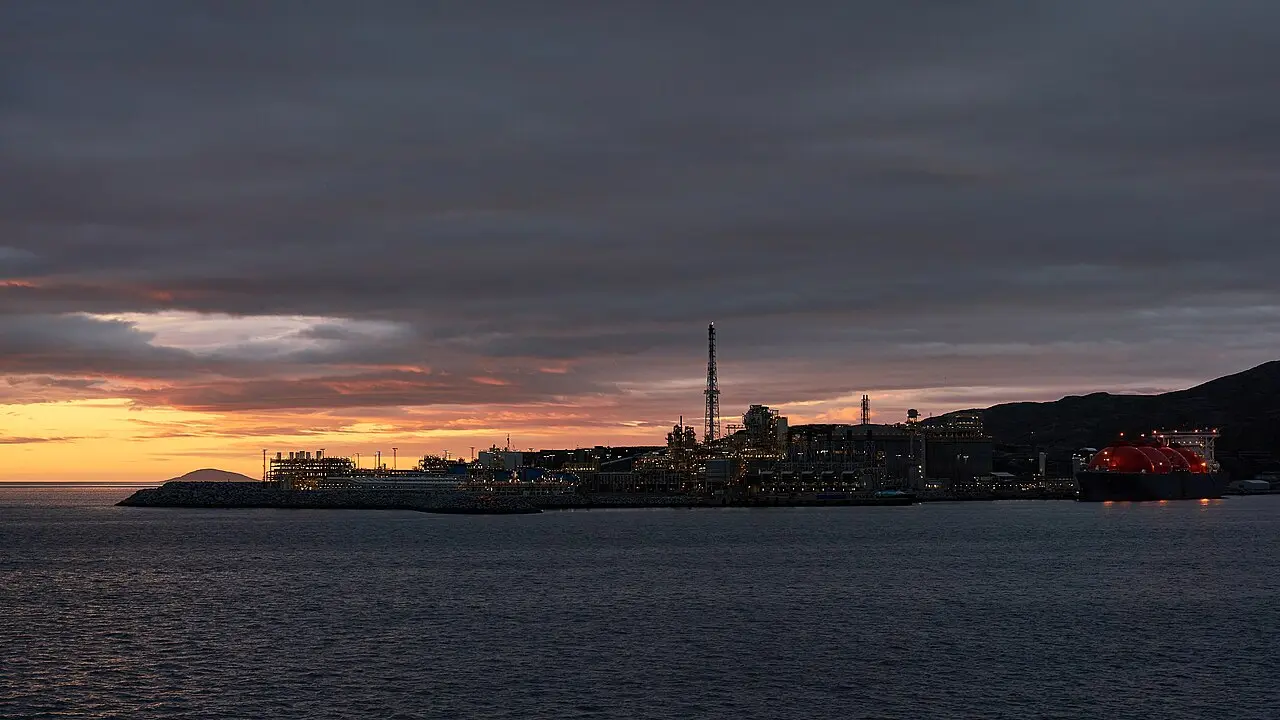
LNG Canada took its final investment decision — the point where owners commit the money and construction proceeds — on Phase 2 of its Kitimat terminal in September 2026. The decision doubles the plant to 28 million tonnes per annum of liquefied natural gas, roughly twice what it handles today. Together with the Woodfibre and Cedar LNG plants now under construction, Canada is aiming to ship 33 million tonnes a year by the end of the decade, according to Energynews. That is still far short of Prime Minister Mark Carney’s stated target of 100 million tonnes a year.
The sourcing detail is the part suppliers should read twice. Radio-Canada reports LNG Canada will use Chinese steel on the $33-billion expansion in Kitimat. That sits alongside the warning in a whitepaper by PETRONAS and Wood Mackenzie, which names poor cost competitiveness — driven by high labour costs and heavy infrastructure requirements — as the first thing Canada must fix to attract money. Wood Mackenzie’s Joshua Ngu said Canada offers resource scale, Pacific access and short shipping routes, but buyers still weigh cost, timeline and execution risk against projects that are further along.
The competition is real and moving. In 2026 alone, CP2 LNG, Commonwealth LNG and Delfin FLNG 1 all reached final investment decisions in the United States, while projects in Africa, Australia and Latin America continue toward sanction. Wood Mackenzie expects Asian gas demand to roughly double, from about 260 million tonnes a year today to around 500 million by 2060, with most of that volume not yet under contract.
What it means for your business.
If you fabricate modules, build pipe, supply equipment or sell field services in northern British Columbia and the Montney, Phase 2 is the biggest confirmed order book in the country for the rest of this decade — but the Chinese steel decision tells you the buyer is choosing on landed cost, not on being nearby. Rewrite your capability material around delivered cost, proven schedule performance and execution risk you take off the owner's hands, with named project references and dates. Get that in front of the engineering and procurement contractors running Phase 2 packages this quarter, while scopes are still being broken up.
Next step: Rebuild your capability package around delivered cost and schedule certainty, and put it in front of the Phase 2 engineering and procurement contractors this quarter.
Explore this opportunity for your businessSources & context.
Reported developments are separated from MKTGSpace’s suggested commercial next steps. Reconfirm current conditions before acting.
See where you fit.
Tell us what you sell. We will come prepared to discuss where your offer fits, who to reach and the marketing strategy and implementation needed to pursue the opportunity.
Talk to us about this signal