
What’s happened.
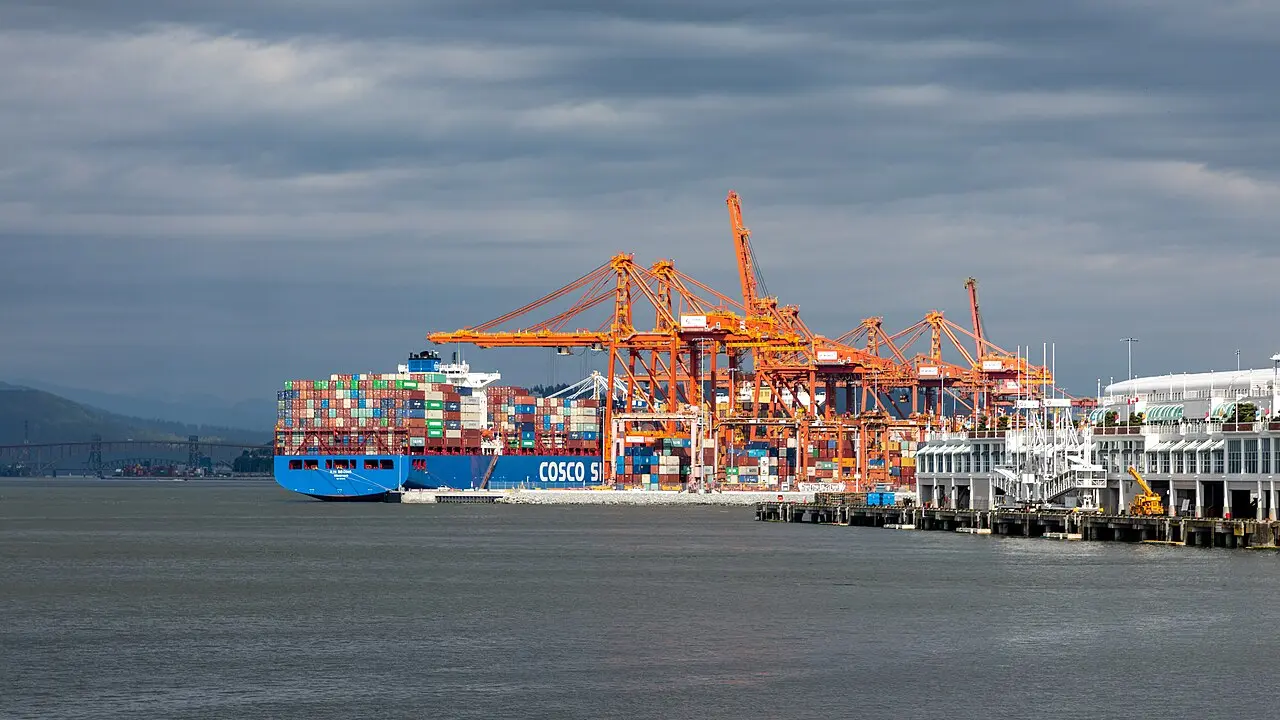
Canada sold more to China last quarter than in any quarter on record. Figures compiled by the China Institute at the University of Alberta and reported on November 10 put two-way trade at $36.78 billion for the third quarter of 2026. Crude oil shipments to China rose 159% to an average of 327,000 barrels a day, most of it moving through the Trans Mountain pipeline and heading to East Asia rather than California as many had predicted. The farm numbers are the bigger story for anyone who processes food here: canola meal exports hit $360.3 million, up from $12.9 million a year earlier; pea exports reached $147.6 million, up from $9.2 million; and beef exports came in at $181.4 million after being close to zero. Those jumps follow a deal last January in which Ottawa won lower Chinese tariffs on Canadian goods in exchange for letting Chinese electric vehicles into Canada.
Alberta and Saskatchewan accounted for nearly 78% of the roughly $4.32 billion year-over-year increase in national exports to China, with Alberta’s gain driven mainly by crude and Saskatchewan’s by canola meal, canola seed, potash and peas. The timing matters: Prime Minister Mark Carney left Wednesday for Asia, with stops at the ASEAN summit in the Philippines and the APEC summit in China, where he is expected to meet President Xi Jinping. His stated goal is to double exports of Canadian goods and services to markets outside the United States by 2035. A political window like this is when supply agreements get signed and when a Canadian supplier gets introduced to a buyer who was unreachable a year ago. Canada’s merchandise trade surplus widened to $5.4 billion in September, so the broader export picture is moving the same direction.
There is a catch worth saying plainly. Vina Nadjibulla of the Centre for Strategic Statecraft points out that in 2024 nearly 70% of Canada’s canola seed exports went to China, and Beijing has used that concentration as leverage during political fights. The exporters who do well out of this are the ones who treat China as one strong market among several, not the one that carries the whole order book. Canada still ships about ten times as much product to the United States as to China, so this is an addition, not a replacement.
What it means for your business.
If you process beef, pulses, canola or packaged food in Alberta, the buyer that disappeared is back and the numbers prove it — $181.4 million of beef and $147.6 million of peas in a single quarter. Your job over the next three to six months is practical: confirm your plant registration and labelling meet Chinese import requirements, get a named distributor or agent rather than waiting for inquiries, and line up a second Asian or European market at the same time so one government decision cannot take your revenue away. Firms that already have paperwork and a distributor will take the volume this winter; the ones starting the process in spring will be quoting against them.
Next step: This month, confirm your export registration and labelling for China and start conversations with at least one distributor there and one in a second market.
Explore this opportunity for your businessSources & context.
Reported developments are separated from MKTGSpace’s suggested commercial next steps. Reconfirm current conditions before acting.
See where you fit.
Tell us what you sell. We will come prepared to discuss where your offer fits, who to reach and the marketing strategy and implementation needed to pursue the opportunity.
Talk to us about this signal