
What can you do if your Google rankings fluctuate daily? Learn why it happens, how often it can change, and how to monitor and fix it with MKTGSpace.
You care about your business. You know SEO is one of the most effective ways to get organic traffic and more conversions. And so, you’re constantly fussing and fretting over your rankings. Maybe you even check them multiple times a day.
When you do, perhaps you notice crazy fluctuations in your search positions. In the morning, your web page is ranking #1. At night, it’s dropped to #4. Why does this happen, and is there anything that can be done about it?
Let’s find out. Ahead, you’ll learn:
- Why keyword rankings fluctuate
- How often they can change
- What affects keyword rankings
- How to improve them
- When to monitor your SEO results
- What to do for more stable conversions
Why Do Keyword Rankings Fluctuate?
Once, getting the #1 position on Google was a matter of following a simple formula. Now, the constant core or minor updates, AI overviews, and LLMs have changed things. Sometimes for the better, sometimes not.
Over the last two years we’ve seen how Google’s updates have completely rocked a website’s SEO, and Google warns of this. In some cases, it’s led website owners to file lawsuits against the search giant.
But all of this doesn’t quite explain why keyword rankings fluctuate throughout the day. Here’s a (not so) quick look at all of the reasons yours may be affected:
Search Engine Factors
- Google algorithm updates
- Personalization and search history
- Geolocation and device type
- SERP layout changes
Website & Technical SEO Issues
- Indexing variability
- Web page load speed
- Crawlability issues
- Content updates or structural changes
- Duplicate or thin content
- Backlink changes
Competitor Activity
- Competitor content updates
- New competitors entering the SERP
- Aggressive paid campaigns (PPC or sponsored content)
User Behaviour & Engagement Metrics
- CTR, bounce rate, and dwell time
- Seasonality and shifting search intent
Rank Tracking Tool Limitations
- Tool delays or inconsistencies
- Changing tracking settings
Manual or Penalty-Related Issues
- Google penalties or spam filters
New Content Testing by Google
- “Google Dance” (When Google tests how well your new page performs, it may shuffle your ranking up and down temporarily)
- Query Deserved Freshness (for news, trends, and events)
How Often Do Google Rankings Change?
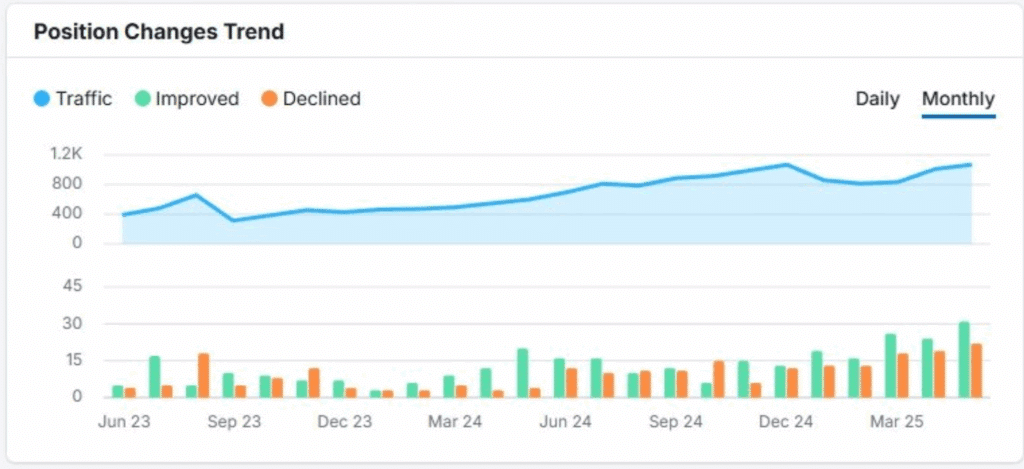
If you’ve been shocked to see your search rankings change multiple times a day, you’re not alone. Rankings can change daily (even hourly) since Google constantly crawls, indexes, and re-evaluates content.
Worried about daily fluctuations? Don’t be. Daily keyword ranking fluctuations are normal. Persistent drops or volatility are not.
Keep this in mind:
- Fluctuation is normal, especially for newer pages.
- Stable pages still shift! Even top-performing content can move up or down.
- Look for trends, not spikes.
How Often Should You Monitor Search Rankings?
The answer is not hourly…it’s not even daily. Checking your ranking averages weekly or monthly can help you see trends more clearly. It also gives your new pages time to settle into their deserved position.
How Should You Monitor Search Rankings?
Tools like Google Search Console, Ahrefs, or SEMrush are good for monitoring keyword movement over time. And if you begin to see a downward trend in your page, you know it’s time for a re-optimization.
When Should You Re-Optimize Your Page?
Give your new page time to marinate on the web. SEO is a long game, which means it can take several months for your page to start ranking. If, after three months, your page isn’t performing as you’d like it to, consider re-optimizing it.
When to act sooner:
- The page isn’t indexing after 7-10 days
- You made a critical SEO error
- You’re in a fast-moving industry (news, product launches, events)
- You discover a duplicate content or keyword cannibalization issue
What Can Improve Declining Search Positions?
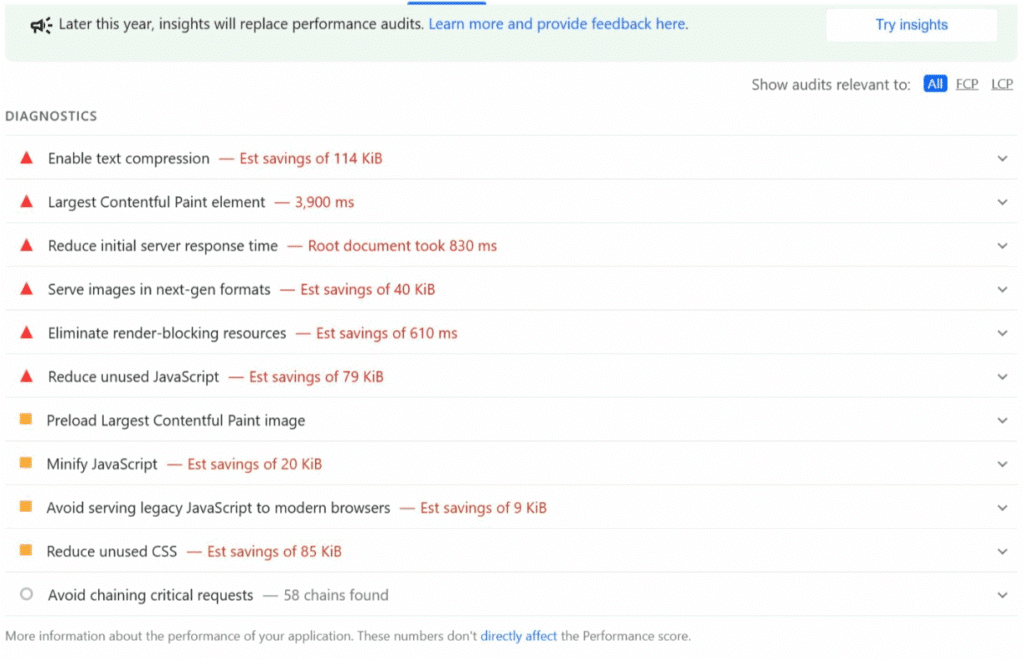
Seeing your rankings decline can feel like a punch to the gut. Moving out of the Top 3 can mean losing almost all of your organic traffic to that page, so taking action is important.
However, understanding why your page is moving down the SERP is more important. This will help you determine how to move forward. So:
- Diagnose the Cause First
Before making any changes, ask:
- Did a Google algorithm update just roll out?
- Did you recently change the page’s content or structure?
- Have you lost backlinks, or did a competitor outperform you?
- Is your content outdated, thin, or no longer aligned with search intent?
Once you find out these answers, you should:
- Update & Improve Content Quality
Google rewards helpful, relevant, and up-to-date content. Strengthen yours by:
- Covering the topic more thoroughly
- Update facts, stats, examples, or product information
- Improve structure
- Incorporate missing related keywords
- Address user intent
- Add visuals
- Include internal links to relevant, authoritative pages
- Improve the meta title and description for a better CTA
- Fix Technical SEO Issues
Declining rankings can occur from crawlability and indexing problems, so next:
- Check Google Search Console for errors, warnings, or manual actions
- Ensure the page is indexed and not blocked by robots.txt or noindex tags
- Improve page speed and mobile usability
- Fix broken links, redirects, or missing images
- Use canonical tags properly to avoid duplicate content confusion
- Ensure your sitemap is up to date and submitted
Here’s a recap of this info in a handy little table for quick reference:

Is There a Way to Ensure Steady Site Traffic?
Search rankings are fluid, so you shouldn’t panic if you suddenly see your web page drop a few positions. Give it time, and you will likely see it bounce back.
But won’t you lose out on potential traffic on the days your page isn’t at the top of the SERP? Likely, you will. Is there anything that can be done to maintain consistent traffic? While your organic traffic may fluctuate day to day, it’s the bigger picture that counts.
With that said! If you don’t want to rely on SEO alone for site traffic, there are other ways to get clicks.
The Multi-Pronged Approach: SEO, PPC & Brand Awareness
Thanks to AIOs and LLMS, the effectiveness of SEO is changing. However, it’s still an incredibly effective (in fact, the most effective) way to bring organic traffic to your website. So during these ranking fluctuations, it’s good to have a multi-pronged strategy in place.
Optimizing for SERP Features
Landing the #1 search position on Google is great. Earning the Snippet is fantastic, and being the first name in the Local Pack is prime. But attaining all of these things is even better. Learning how to create content that enables this will help you sustain organic traffic, even if your SERP position slips.
PPC: Google & Meta Ads
Google ads appear before any of the search results. If you’re super talented at PPC or have an experienced PPC specialist on your side, your ad can appear at the very top of the SERP. While working on SEO, using PPC to get clicks sooner can be incredibly beneficial.
Brand Awareness
As a Calgary-based marketing company committed to helping Albertan businesses grow, most of our clients are local. Because of this, one way we build brand awareness for them is through community building. This can be done by digital and in-person efforts, such as networking, hosting webinars, local SEO, partnering with local businesses, and sponsoring events.
Even if your target audience isn’t local, you can still build brand awareness through efforts like:
- Content Marketing: Blogs, guides, webinars.
- Podcasts & Guest Appearances: Launch your own or be featured.
- Influencer Partnerships: Partner with thought leaders in your industry to tap into their audience.
- SEO & Thought Leadership: Meet search intent and create high-quality resources.
- Email Marketing & Lead Magnets: Offer free value in exchange for email signups.
- Social Media Strategy: This one’s platform-specific. Prioritize conversations over self-promotion.
- Online Community Engagement: Join Slack groups, Reddit threads, and Discord communities and offer advice or answer questions.
- PR & Media Tactics: Hire a PR firm to land features in industry-specific magazines or podcasts.
Take the Stress Out of Your Marketing Strategy
Staying on top of your SEO takes a team—not to mention throwing PPC and brand awareness into the mix. If you’re stressed out with trying to become specialists in every area of your business, we can help. MKTGSpace offers multiple pricing packages to give you the right fit for your needs and business goals. Contact us today to learn more about how to get started.
Apply this to your business
A 45–60 minute working session with a senior marketing leader. No obligation, just a clear next step.